
With the rise of a nationwide fitness craze, indoor badminton has become a popular recreational and competitive sport for the general public. Whether you are a badminton enthusiast or an entrepreneur looking to invest in and operate a badminton facility, it is essential to understand the rules of the sport, the necessary equipment, and the requirements for court construction. This article provides a comprehensive overview of indoor badminton and introduces our modular tent structures—an ideal solution for the rapid construction of standardized indoor badminton courts.
What is indoor badminton?
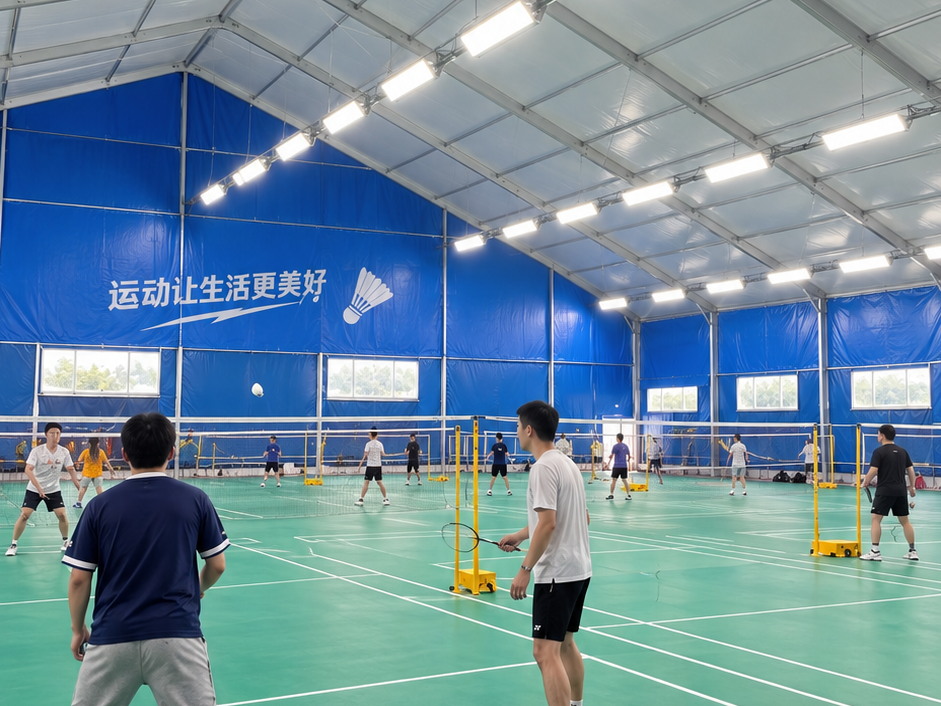
Indoor badminton is played within an enclosed facility and can be contested in either singles or doubles. The court for singles is narrower, placing a premium on movement speed and agility, while the doubles court is wider, emphasizing teamwork and tactical positioning; there are also differences in the service rules for each format.
Matches follow a best-of-three, 21-point scoring system. If the score reaches 20-all, a player or pair must lead by 2 points to win, with a hard cap at 30 points. Although badminton can be played outdoors for recreation, even a light breeze can alter the shuttlecock’s flight path; therefore, professional training and competitive matches are almost exclusively held indoors.
Key Advantages of Indoor Badminton
Unaffected by wind: The enclosed space eliminates the impact of air currents, ensuring a stable ball trajectory and allowing players to focus on technical and tactical training.
Available for year-round operation: Unaffected by weather conditions such as rain, snow, or high temperatures, allowing players to train consistently and the facility to remain open all year.
Reducing sports injuries: The facility is equipped with professional-grade sports flooring that offers excellent elasticity and slip-resistant grip, making sudden stops and changes in direction safer while protecting the knees and ankles.
Essential Badminton Equipment
Rackets: Beginners should choose models with moderate weight and a balanced feel; intermediate or advanced players can select head-light or head-heavy rackets based on their specific playing style.
Shuttlecocks: Goose-feather shuttlecocks offer stable flight, making them ideal for matches; nylon shuttlecocks are durable and cost-effective, perfect for daily practice.
Badminton Shoes: Prioritize specialized footwear that provides strong lateral support, excellent grip, and cushioning to accommodate the frequent side-to-side movements required in badminton.
Apparel and Protective Gear: Opt for quick-drying, breathable sportswear, and incorporate items like wristbands and knee braces to enhance protection during play.
Basic Standards for Indoor Badminton Courts
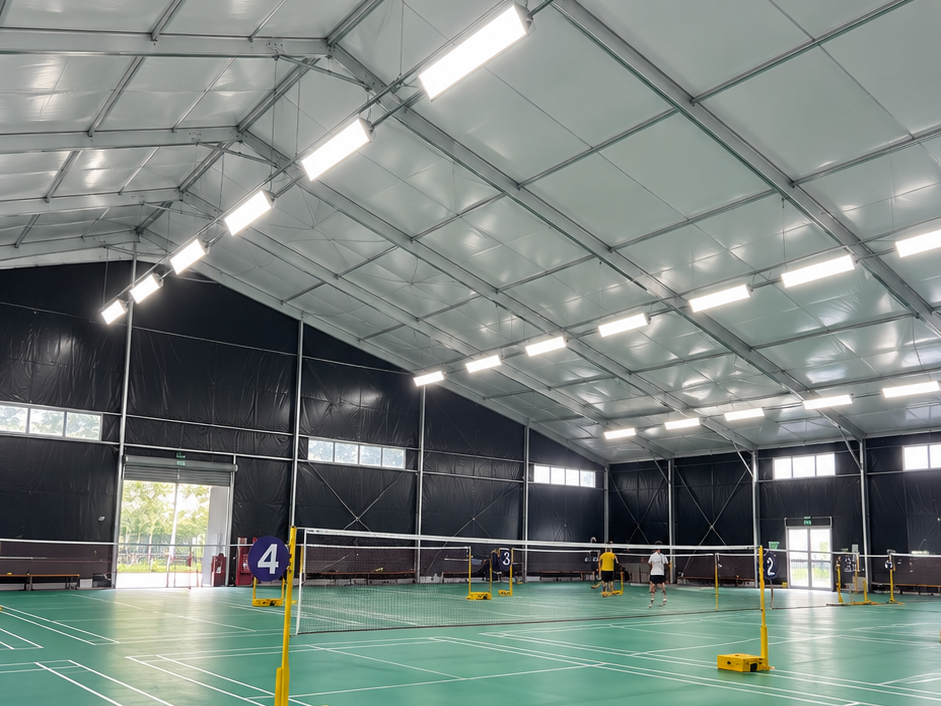
A standard badminton court has a total length of 13.4 meters, with a width of 5.18 meters for singles and 6.1 meters for doubles; the court is marked with sidelines, a center line, and service lines. The clear ceiling height must be at least 9 meters to ensure that high clears and smashes are not obstructed, and buffer space should be provided around the perimeter of the court. The net stands 1.524 meters high at the center, and the net posts must be secure and properly tensioned. Lighting is also critical; it should be uniform and anti-glare, avoiding shadows or harsh, direct light. Additionally, when multiple courts are arranged together, a ventilation system must be incorporated.
How to Choose a Suitable Badminton Court
Renting existing facilities often involves evaluating factors like flooring, lighting, and rental costs. Public spaces in schools or communities can be suitable for group activities but typically require advance booking. Meanwhile, constructing a traditional, permanent sports facility entails high costs and a lengthy development timeline.
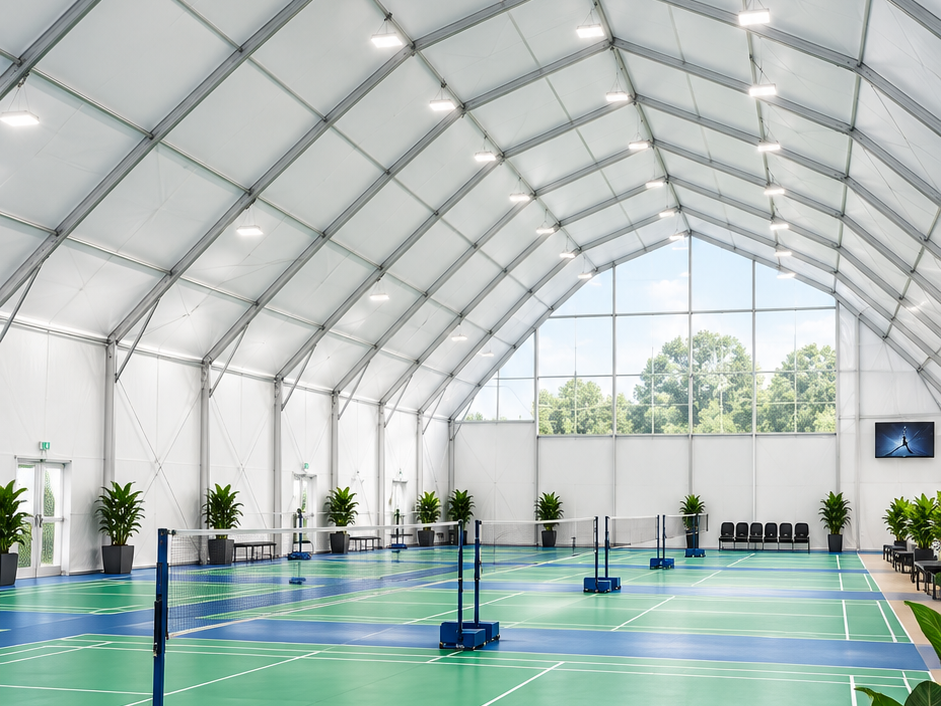
Wisbert’s prefabricated aluminum-alloy sports marquees offer a flexible, superior alternative. Featuring a modular design, these structures can be rapidly assembled on any level, open site. Their clear-span (column-free) interiors easily accommodate a 9-meter interior height, allowing for the efficient, integrated layout of multiple standard-sized courts. These marquees can be equipped with specialized flooring, lighting, and ventilation systems, making them ideal for everything from temporary event venues to long-term badminton club operations. Once a project concludes, the structures can be dismantled, relocated, and reused, significantly reducing capital expenditure on fixed assets. With a proven track record—including projects for major events like the Hangzhou Asian Games—Wisbert provides a comprehensive, one-stop solution covering site planning, design, and construction.