For commercial settings such as brand launches, industry exhibitions, high-end weddings, and outdoor banquets, atrium-style tents have become a highly popular temporary architectural solution. They are favored for their large, column-free spans, European-inspired vintage aesthetics, and rapid assembly capabilities. However, event planners and clients sometimes focus exclusively on visual appeal during the selection process—overlooking structural safety and material suitability—which can lead to issues like poor wind resistance, difficulty in controlling natural light, or budget overruns. This article breaks down the key considerations for selecting an atrium-style tent—covering the main framework, enclosure materials, decorative elements, and comprehensive evaluation—to help you align your choice with the specific requirements of your project.
The main framework serves as the tent’s load-bearing core, determining the spatial span, structural integrity, and reusability. There are two primary types of materials available on the market, which can be selected based on the scale of your project.
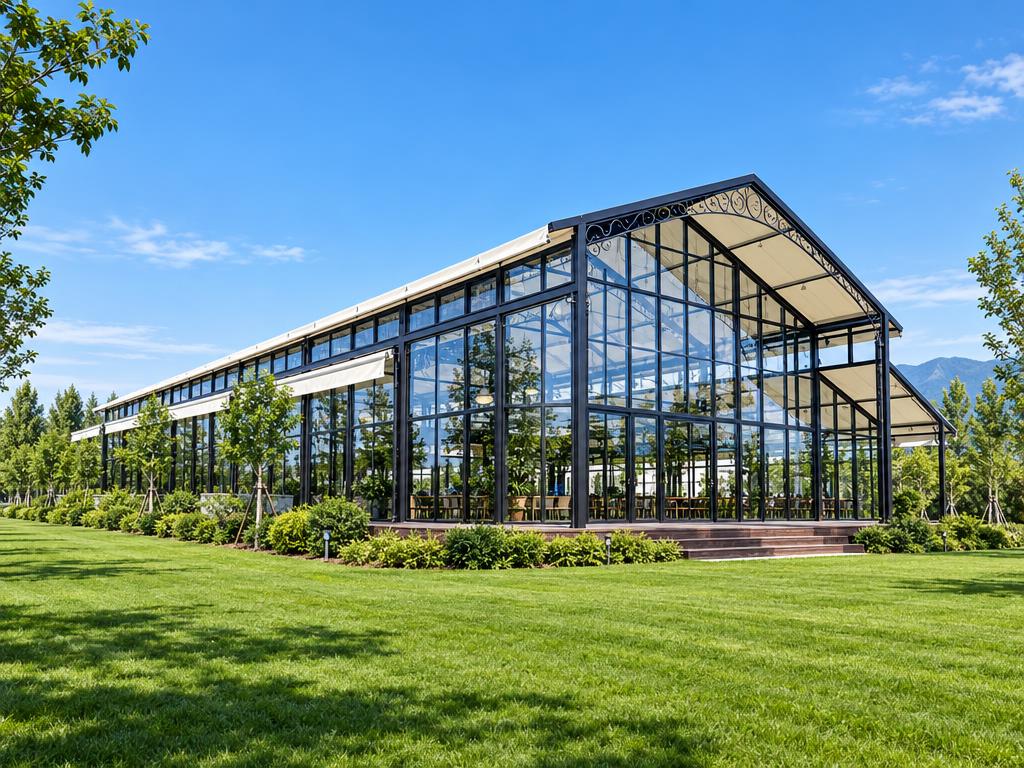
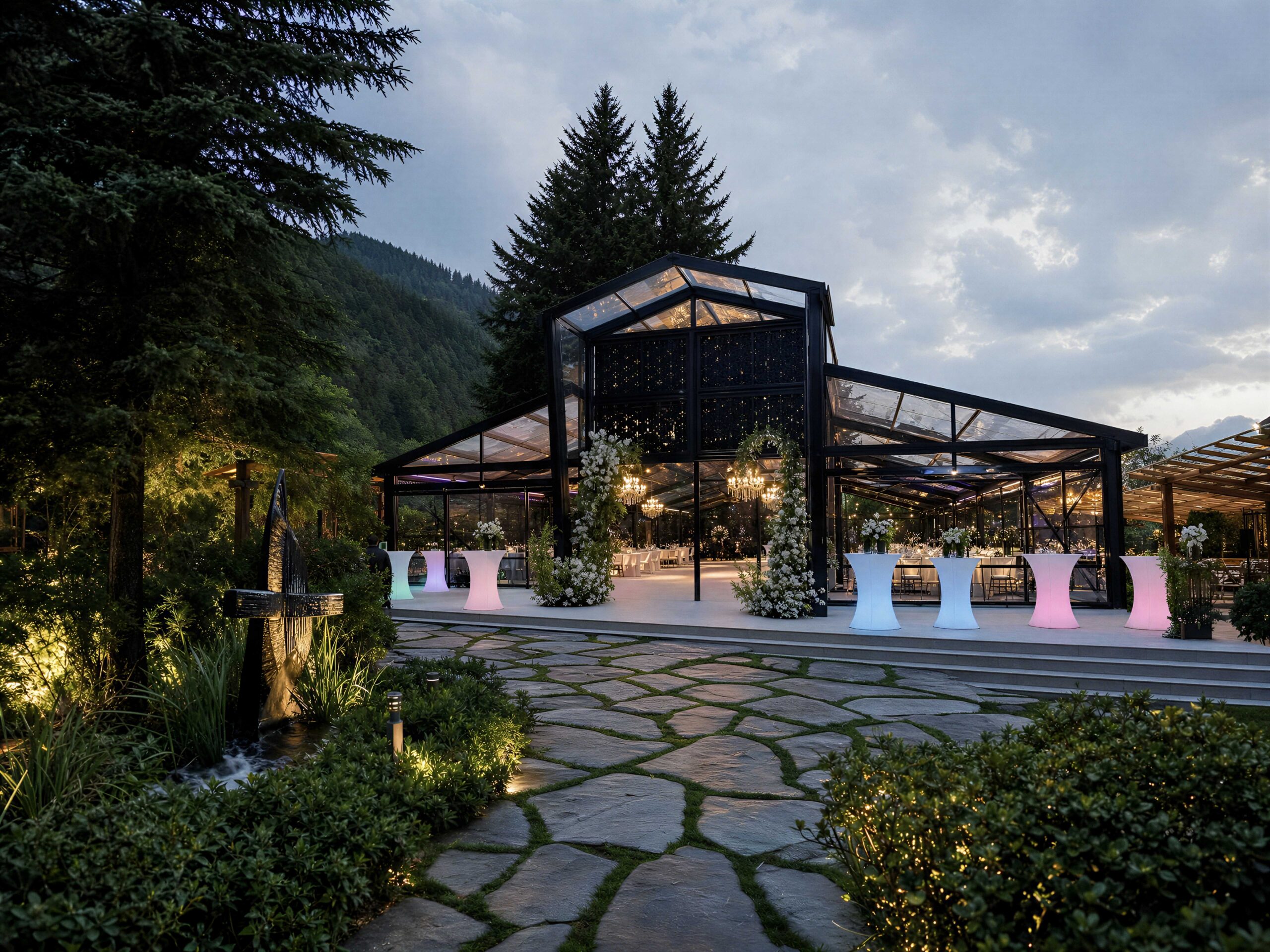
A high-strength aluminum alloy frame is the preferred choice for medium-to-large-scale commercial events. It offers a high load-bearing capacity combined with a lightweight profile and excellent corrosion resistance. Easy to transport, assemble, and dismantle, it enables the creation of expansive, column-free interior spaces with superior wind resistance. Furthermore, it is designed for repeated use, making it ideal for large exhibitions, brand launches, large-scale weddings (accommodating up to a thousand guests), and high-end outdoor galas—especially in environments with complex wind conditions or where the structure will be deployed multiple times. The frame can also be finished with a black powder coating; paired with vintage-style structural lines, this complements the medieval, retro aesthetic characteristic of atrium-style tents.
A galvanized steel frame, by contrast, serves as an economical solution for smaller, short-term events. It provides a stable, reliable structure at a lower procurement cost. However, steel is heavier, more time-consuming to assemble and disassemble, and prone to rust over time with repeated use, making it less suitable for frequent redeployment. It is best suited for smaller-scale, one-off commercial events with limited spans and tighter budgets.
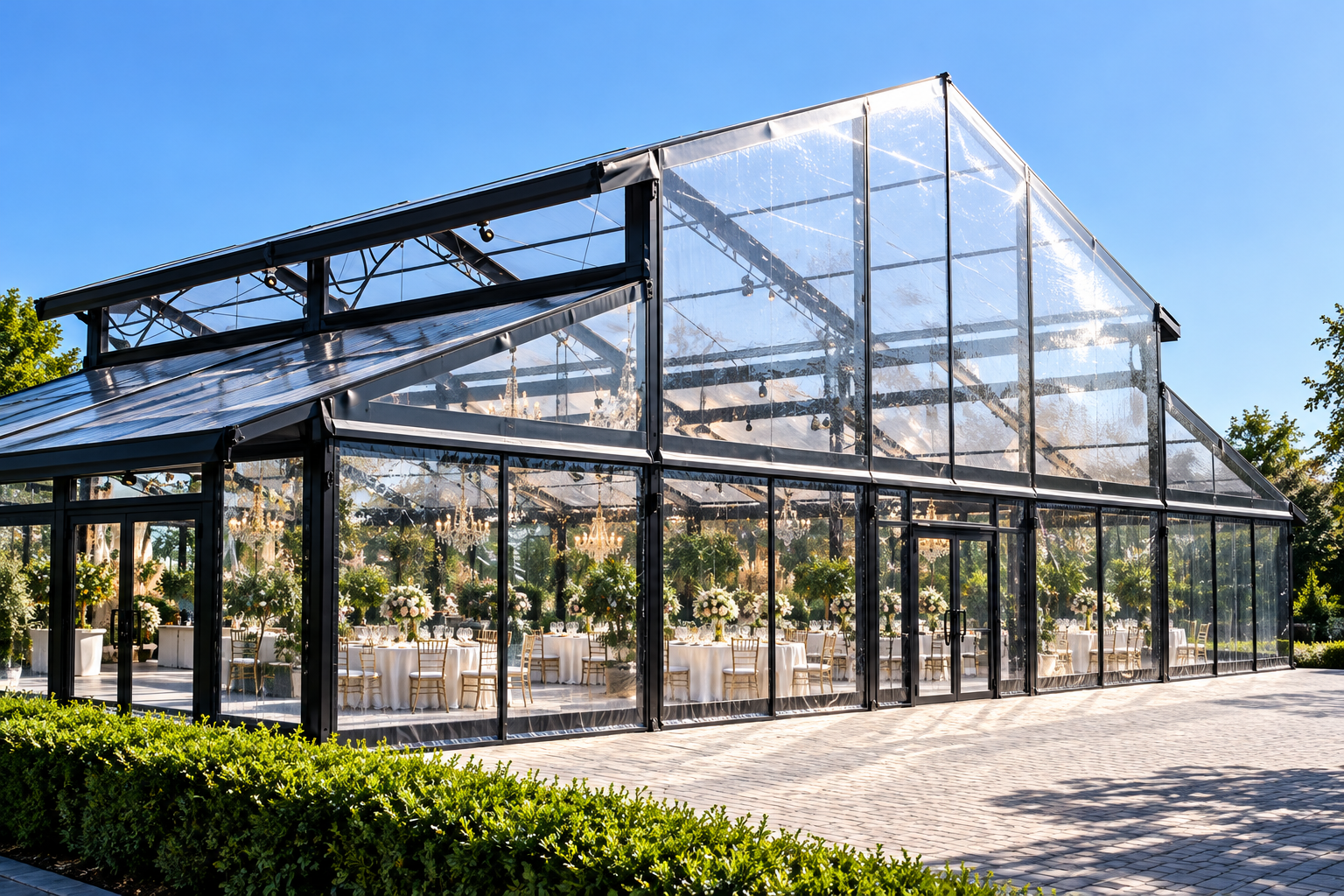
Enclosure materials—which include both walls and roofing—define the atmosphere of the space while providing essential functional benefits, such as weather protection (rainproofing), thermal insulation, and wind resistance. These components can be mixed and matched to suit specific needs. Glass curtain walls offer exceptional light transmission, allowing for an abundance of natural light and creating a sophisticated, high-end atmosphere that looks stunning in photographs. They are frequently used for events such as weddings, VIP tasting sessions, and upscale banquets—occasions that prioritize an immersive, open, and transparent setting. Their drawbacks include higher costs and more stringent requirements for the load-bearing capacity of the structural framework.
PVC tarpaulin is a highly versatile enclosure material, available in transparent, semi-opaque, and fully opaque varieties. Transparent PVC provides a cost-effective way to mimic the clarity of glass, making it ideal for markets and small-to-medium-sized banquets. Semi-opaque PVC balances natural lighting with thermal insulation—helping to keep interior temperatures down—and is well-suited for outdoor parties. Fully opaque PVC blocks out intense external light, protecting projected visuals, which makes it perfect for forums, product launches, and light-and-shadow shows. Overall, PVC is lightweight, quick to install, offers reliable weather resistance (against rain and wind), and provides excellent value for money.
Decorative steel components serve as the finishing touch for achieving a vintage aesthetic in atrium-style tents; they are primarily for visual enhancement rather than structural load-bearing. Common designs include wrought-iron-style filigree or grid-patterned steel elements, which add depth to the facade and evoke a classic European atmosphere. The choice of design can be tailored to the specific event: minimalist, linear styles are best for commercial brand activations, while intricate, ornate patterns can be used for weddings, galas, and other ceremonial occasions to create a more romantic and refined experience.
Once the materials have been selected, the plan should be evaluated across four dimensions to ensure it is well-suited to the site conditions. First, consider the site environment: aluminum alloy frames are preferred for coastal or high-wind areas; for rainy locations, ensure robust waterproofing and sealing; and for hot summer settings, incorporate ventilation and shading solutions. Second, consider the nature of the event: weddings and banquets benefit from transparent enclosures, whereas exhibitions and product launches require a focus on light-blocking capabilities and the structural capacity to support suspended screens and lighting equipment. Third, consider the budget and frequency of use: aluminum alloy is the better choice for projects involving repeated use, while galvanized steel paired with PVC tarpaulin is a more cost-effective solution for one-off, smaller-scale events. Fourth, prioritize safety and compliance. For any commercial activity open to the public, it is essential to verify structural calculation reports and the fire-retardant ratings of materials, ensuring full adherence to local regulations governing temporary structures.
In summary, the selection process for an atrium tent should follow this logic: first, establish a safe structural framework; next, select the enclosure elements to create the desired atmosphere; and finally, incorporate decorative details. Do not be swayed solely by aesthetics—begin by determining the appropriate framework material based on the scale of the event, then choose between glass or PVC enclosures to suit the intended ambiance, and add steel decorative elements as needed. By carefully weighing factors such as the site’s climate, safety standards, and budget, you can create an atrium tent space that is safe, reliable, visually striking, and perfectly tailored to the requirements of your event.