

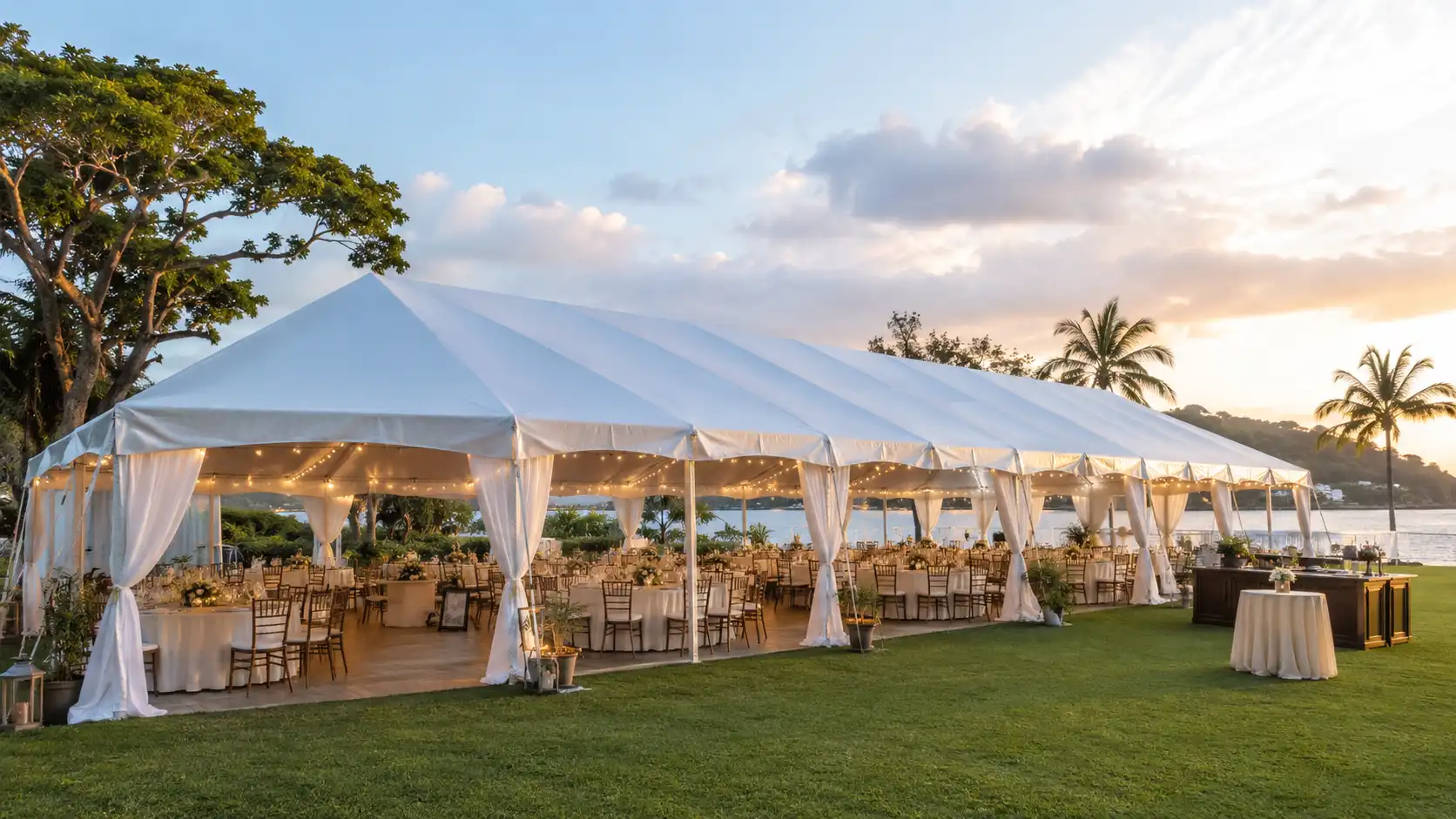
Large outdoor events are becoming increasingly common. Corporate celebrations, trade shows, product launches, sporting events, music festivals, food festivals, and large weddings all require safe, comfortable, and visually attractive temporary venues.
Large event tents offer flexible installation, short construction times, reusable structures, and strong adaptability to different sites. However, with many tent structures, materials, and sizes available, buyers who focus only on price may overlook safety, suitability, durability, and long-term operating costs.
How should you choose an outdoor event tent, and what should you consider before purchasing a large event tent?
1. Choose the Structure According to the Event Type
Different events have different space and performance requirements.
Trade Shows and Product Launches
Commercial events usually require a clean, spacious, and professional environment that supports brand presentation.
A large-span tent with few or no internal columns is often the preferred option because it allows flexible placement of exhibition booths, display areas, LED screens, reception desks, and product zones.
Glass walls, clear PVC panels, solid wall systems, double glass doors, and printed branding can also improve the appearance of the venue.
Weddings and Banquets
Wedding tents place greater emphasis on natural light, decoration, guest comfort, and atmosphere.
Clear roofs, transparent walls, interior liners, curtains, chandeliers, and wooden flooring are commonly used for wedding projects.
For evening weddings, lighting, climate control, staging, sound systems, and electricity supply should be planned in advance.
Sporting Events and Music Festivals
Sporting events and music festivals usually attract large numbers of visitors and therefore require wide spans, multiple entrances, good ventilation, and effective emergency evacuation planning.
The tent should provide an open interior and sufficient space for audience areas, backstage rooms, equipment zones, medical stations, and emergency exits.
Corporate Events and Celebrations
Corporate annual meetings, anniversary celebrations, and opening ceremonies often need to combine functionality with brand presentation.
A modular aluminum-frame tent can be customized with corporate logos, theme colors, advertising graphics, and branded interior elements.
2. Determine the Tent Size Carefully
The size of a large event tent should not be calculated only according to the number of attendees.
The total area should also include:
- Tables and seating
- Stages and backstage areas
- Reception and registration desks
- Catering and service zones
- Sound and technical equipment
- Main walkways
- Emergency and evacuation routes
For example, an event for 500 guests may require very different floor areas depending on whether it uses standing reception, theater-style seating, or round banquet tables.
It is therefore best to provide the manufacturer with a floor plan or a clear list of functional requirements. The manufacturer can then recommend a more suitable tent size and interior layout.
3. Check the Frame Material
The frame is the main structural component of a large event tent.
Many modular large tents use aluminum-alloy main frames combined with steel connectors. Aluminum is relatively lightweight, corrosion-resistant, easy to transport, and suitable for repeated installation.
When evaluating the frame, consider:
- Main profile dimensions
- Aluminum grade and surface treatment
- Corrosion protection of steel connectors
- Frame connection methods
- Tent span and structural configuration
- Whether the design has been evaluated for the specific project conditions
Frame quality cannot be judged only by appearance. The structural design must match the tent width, length, side height, location, and expected environmental conditions.
4. Evaluate the Tent Fabric
The tent fabric protects the interior from rain and sunlight and forms the main weatherproof enclosure.
A suitable event-tent fabric should provide several important properties.
Waterproof Performance
Outdoor events may be exposed to rainfall. The roof fabric, sidewalls, and seams should therefore provide effective waterproofing.
Flame Retardancy
Flame-retardant performance is especially important for events with large numbers of people.
The required standard should be confirmed according to the project location, event type, venue rules, and applicable local regulations.
UV Resistance
Tents used outdoors for extended periods should have suitable UV and weather resistance to reduce fading, brittleness, and premature material aging.
Ease of Cleaning
Fabric with a smooth, protective surface is usually easier to clean and maintain, making it more suitable for repeated use.
5. Confirm Suitability for the Local Climate
A large event tent must be designed according to the actual installation environment.
Before ordering, provide the manufacturer with the following information:
- Country and city of installation
- Season of use
- Typical and extreme wind conditions
- Expected rainfall
- Whether the tent will be used in winter
- Whether snow accumulation is possible
- Planned installation period
Wind and snow loads vary between regions. Coastal, high-altitude, cold-climate, and high-wind locations may require reinforced frames and stronger anchoring systems.
During severe weather, operators should also follow the manufacturer’s instructions, inspection procedures, and emergency-management recommendations.
6. Select the Correct Anchoring Method
Tent stability depends not only on the frame but also on the anchoring system.
Grass and Soil
Where ground conditions permit, steel stakes or ground anchors are often used. Before installation, confirm that there are no underground cables, gas pipes, or other utilities.
Concrete and Asphalt
On hard surfaces, tents may be secured with expansion bolts, chemical anchors, or engineered ballast systems, depending on site conditions.
Sites Where Drilling Is Not Permitted
Public plazas, shopping centers, and certain event venues may not allow drilling.
In these locations, concrete blocks, steel weights, water ballast, or other engineered systems may be required.
The anchoring method should be determined by the manufacturer according to the tent size, installation surface, and environmental conditions.
7. Choose Suitable Walls, Doors, and Windows
A large event tent can be open-sided, partially enclosed, or fully enclosed.
Common wall options include PVC fabric walls, clear PVC walls, glass walls, ABS solid walls, steel-sheet walls, and insulated panels. Each option offers different levels of appearance, insulation, protection, and cost.
PVC sidewalls are suitable for many standard events. Glass walls and clear roofs are popular for weddings, automotive exhibitions, and premium brand events. Solid or insulated walls may be better for temporary halls and longer-term installations.
Entrance options can include roll-up doors, glass doors, double doors, and large equipment-access doors.
8. Plan the Flooring, Climate Control, and Interior Equipment
The overall comfort of the tent depends on its supporting systems.
Modular flooring is recommended when the ground is uneven, wet, muddy, or unsuitable for a professional event environment.
Air-conditioning and ventilation may be needed in hot weather, while heating and insulation may be required during colder seasons.
Other common accessories include:
- Carpets
- Lighting systems
- Ceiling liners
- Curtains
- Partitions
- Stages
- Tables and chairs
- Rain gutters and downpipes
- Emergency lighting
- Exit signs
These items should be included in the overall project plan rather than considered only after the tent has been installed.
9. Understand the Installation and Maintenance Requirements
Although large event tents use modular structures, they should still be assembled by trained teams following professional installation procedures.
Before installation, confirm the site dimensions, surface conditions, workforce requirements, equipment needs, and safety zones.
During assembly, the team should inspect the frame connections, fabric tension, anchoring system, and entrances.
After the tent is placed into service, it should be checked regularly for:
- Loose bolts and connectors
- Damaged or worn fabric
- Movement of the anchoring system
- Blocked rain gutters or drainage pipes
- Deformed flooring
- Unsafe electrical installations
After the event, the tent fabric should be cleaned and fully dried before packing and storage to reduce the risk of mold and mildew.
10. Do Not Compare Price Alone
The price of a large event tent depends on many factors, including its width, length, frame profile, fabric type, wall system, anchoring method, flooring, and accessories.
Two tents that look similar may have major differences in structural strength, material weight, connector design, durability, and service life.
In addition to price, compare:
- Factory production capacity
- Raw-material quality
- Engineering and customization capabilities
- Experience with similar projects
- Packaging and transportation solutions
- Installation support
- Spare-parts availability
- After-sales service
Conclusion
Choosing the right large outdoor event tent requires a comprehensive evaluation of the application, number of guests, installation site, local climate, structural system, and required accessories.
A professional tent manufacturer should provide more than a product. It should also recommend suitable dimensions, materials, structures, anchoring systems, and installation solutions based on the customer’s actual project requirements.
We manufacture customized large event tents for trade shows, sporting events, weddings, celebrations, festivals, and temporary venues. Customers can provide the installation location, event type, expected number of guests, and site conditions to receive a recommended tent configuration.